Kyrgyzstan — the "Celestial Mountains"
Kyrgyzstan, whose territory is almost entirely occupied by the Tian Shan mountain range (meaning "Celestial Mountains"), sits at the heart of Central Asia.
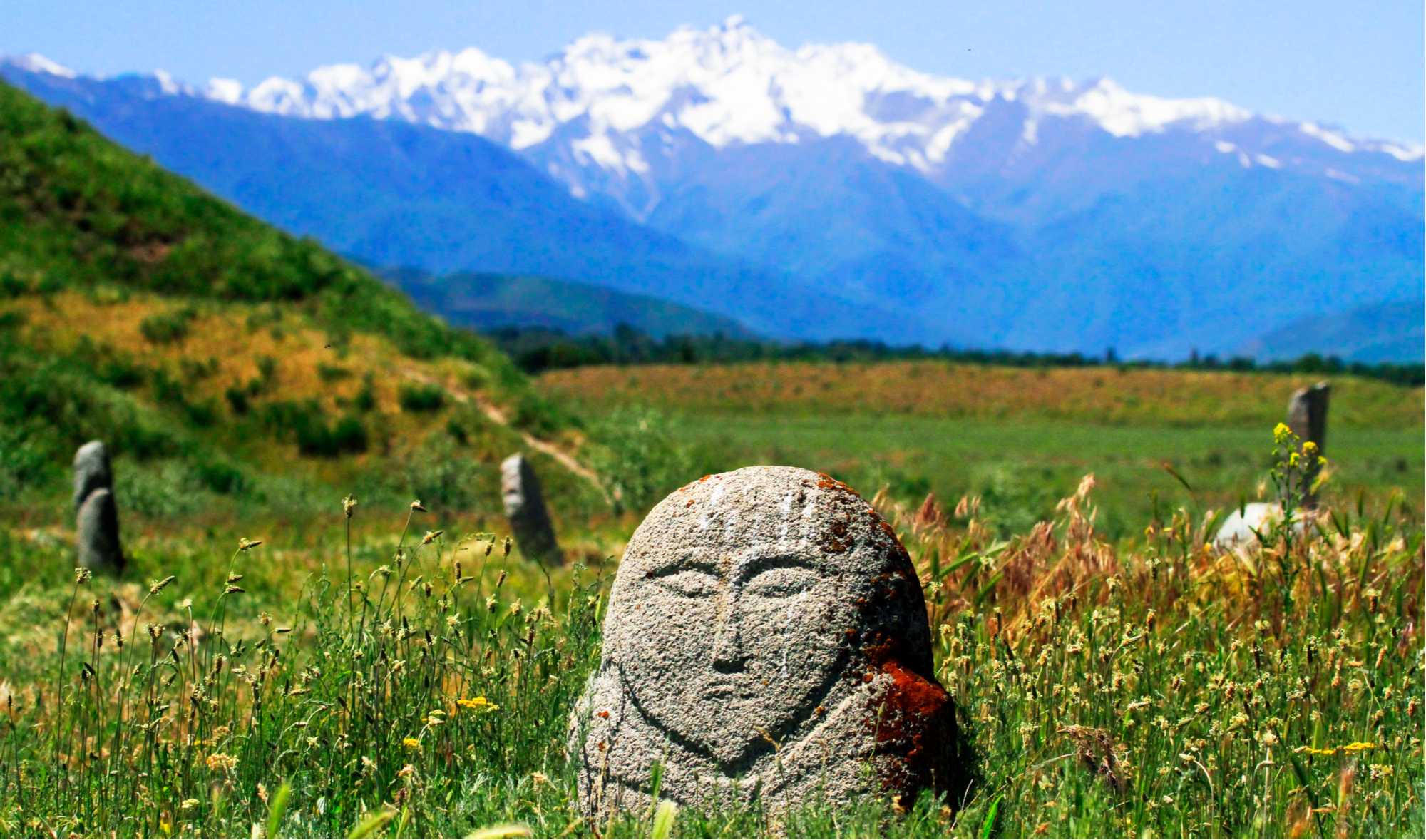
For centuries it was a mandatory crossing point for all merchants and caravans on the Silk Road. Countless remnants bear witness to this history, despite the destructive passage of conquerors as famous as Genghis Khan and Timur Lang (Tamerlane).
Before communism swept away all religion, Nestorian Christianity, Buddhism, Zoroastrianism and, more recently, Islam each left their mark on the cultures of the various Central Asian peoples.
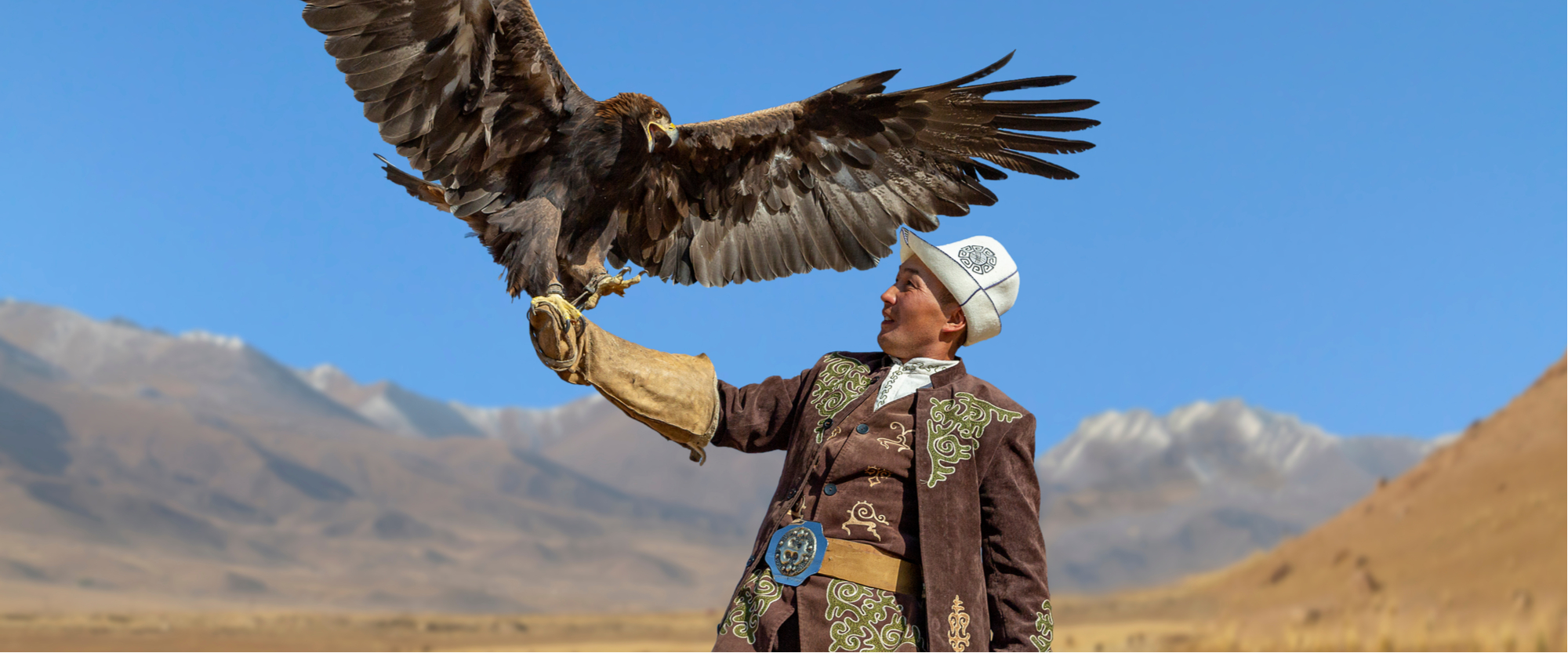
Genetically, the Kyrgyz originate from the region of the Yenisei River (present-day Russia), and share markers with Native American peoples and even Celtic ones. The Kyrgyz people are above all nomadic herders. Flocks of sheep, cattle, yaks and — above all — horses remain a source of immense pride for their owners.
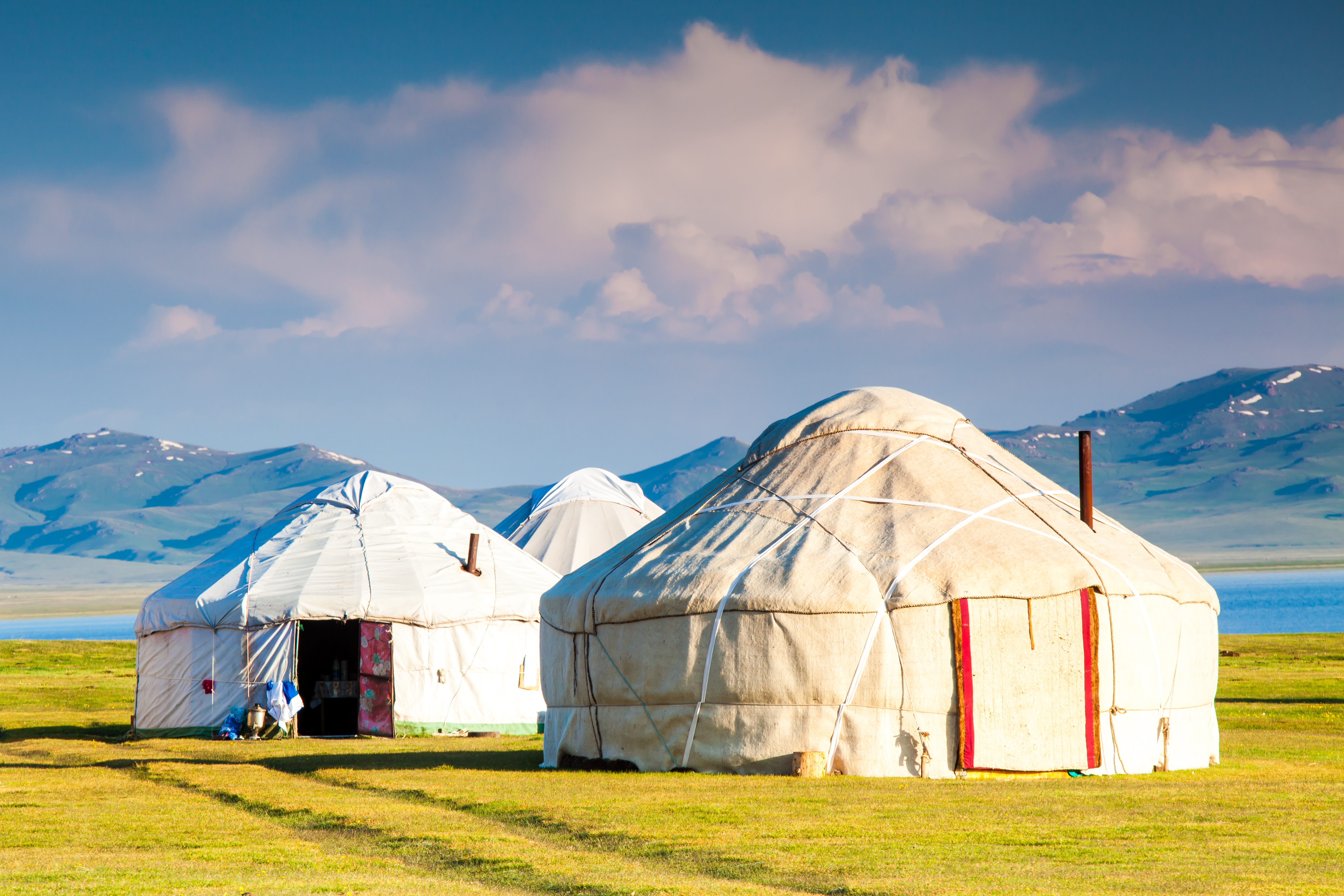
It is of course on horseback that the tchabane (the local cowboy) watches over his herds, visits neighbours, and carries news from yurt to yurt — the traditional felt dwelling. "He who has no horse has no feet" goes a Kyrgyz proverb, and it remains true today: moving through the mountains on horseback is simply easier than by car!
This is why we invite you to discover this wonderful country with us on horseback: its untouched nature and its people, whose kindness and warm hospitality have endured across the ages.
You will be surprised by the infinite variety of landscapes that such a small country can offer — from lush high-altitude valleys to semi-desert plateaux, from ancient forests to silent mountain lakes, from vertiginous peaks to successions of jagged canyons. At every pass crossed, a new surprise, a new enchantment awaits.
Here you will meet the "people of the high steppes", with traditions that are at once mountainous and nomadic, and as attached to their herds of horses as any Mongol…
Geography
At the heart of Central Asia, almost entirely covered by the Tian Shan massif — the "Celestial Mountains".
Culture
A nomadic, herding people. The yurt, the horse and hospitality are at the heart of Kyrgyz life.
Altitude
Passes reaching 3,600 m. Hugely varied landscapes: steppe, desert, forests, mountain lakes, canyons.
History
A Silk Road crossroads for centuries. Remnants of every Central Asian civilisation can still be found here.
Preparing your trip
Visas
Post-Covid update: Since 2022, all restrictions put in place during the Covid-19 pandemic have been lifted for travellers from all countries. More information at gov.uk — Kyrgyzstan travel advice.
Since 24 July 2012, citizens of 60 countries do not need a visa to travel to Kyrgyzstan. A simple entry stamp is applied to the passport and stays of up to 60 days are permitted (non-cumulative). Your passport must have a validity of at least 6 months from the date of entry.
This applies to the majority of European countries. You can check whether you need a visa on the official Kyrgyz government site: Kyrgyzstan eVisa (official, in English) (this site is unfortunately not always accessible).
If you plan to ride independently in Kyrgyzstan, you will find useful tips here.
Climate & best season
The best period for riding and trekking is June to September, when the high-altitude pastures (jaïloos) are accessible and the weather is generally stable and warm during the day.
Temperatures at altitude can drop significantly at night even in summer — warm layers are essential. Afternoon thunderstorms are common in July and August, so a waterproof layer is a must.
Getting there
Kyrgyzstan's main international airport is Manas International Airport, located about 25 km from the capital Bishkek. Several airlines operate routes to Bishkek from major European hubs, often via Istanbul, Moscow or Dubai.
We handle all transfers between the airport and our base, as well as all internal logistics throughout the trip — you simply need to get yourself to Bishkek.
Health & vaccinations
No specific vaccinations are legally required to enter Kyrgyzstan, but it is advisable to be up to date with standard vaccinations (tetanus, hepatitis A, typhoid). Consult your doctor or a travel health clinic before departure.
Comprehensive travel insurance covering medical evacuation is strongly recommended before any trip to Central Asia.
Currency & practical matters
The local currency is the Kyrgyz Som (KGS). Cash (US dollars or euros) can easily be exchanged in Bishkek and most towns. ATMs are available in cities but rare in rural areas — carry sufficient cash before heading into the mountains.
Mobile coverage is good in most valleys but non-existent at high altitude. An inexpensive local SIM card is useful for the time spent in towns.